
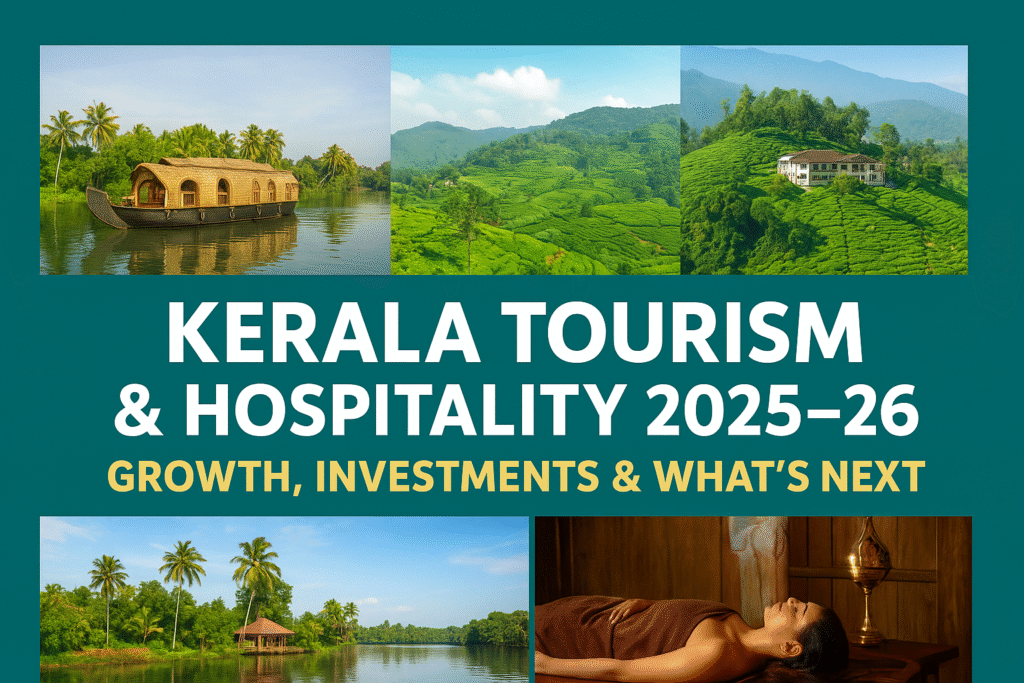
Kerala, known globally as God’s Own Country, is stepping into a new era of hospitality and tourism. With major infrastructure upgrades, fresh private investments, and tech-driven modernization, the state is positioning itself as India’s next big premium tourism hub. Here’s a look at what’s changing, where the opportunities lie, and how the next few years are shaping up for Kerala’s hospitality ecosystem.
1. Tourism Growth & Revival
Kerala’s tourism sector has made a strong post-pandemic comeback:
- Tourist arrivals crossed 2.3 crore in 2024 -a 17% year-on-year growth.
- Domestic travelers remain the backbone, but international arrivals are steadily climbing, supported by new flight routes to Kochi, Thiruvananthapuram, and Kannur.
- Average hotel occupancy in major destinations like Munnar, Kovalam, and Wayanad reached 75–80%, showing a healthy rebound.
The Kerala Tourism Department projects record-high tourist spending by 2026, backed by better connectivity, digital marketing, and diversified experiences -from houseboats to hill stays to heritage circuits.
2. Investment Momentum: Capital Flow into Kerala
Kerala’s tourism sector is attracting unprecedented investor attention.
- The Invest Kerala Global Summit 2025 spotlighted tourism and hospitality as one of its key investment sectors.
- Over ₹8,000 crore worth of MoUs were signed for tourism-related projects, including eco-resorts, heritage conversions, and wellness retreats.
- IHCL (Taj Group) announced plans to expand in northern and central Kerala under its “Ama Stays & Trails” and “Ginger” brands.
- Global chains like Hilton, Marriott, and Radisson are also exploring tier-II markets like Alappuzha, Kozhikode, and Kannur.
Emerging hotspots for investors: Bekal, Vagamon, Poovar, Athirapally, and backwater belts around Kottayam and Pathanamthitta.
Investment trend: A shift toward sustainable, mid-scale, and experience-driven developments -small boutique hotels, homestays, and wellness lodges instead of massive resorts.
3. Major Government & Policy Initiatives
Kerala’s government has rolled out a multi-layered strategy to make tourism a major contributor to the state GDP:
- “Destination Challenge Project” – revamping 50 top destinations with better infrastructure, waste management, and digital amenities.
- “Responsible Tourism Mission” – linking over 1 lakh families to tourism-based livelihood opportunities.
- AI-powered modernization: The state tourism body KTDC has partnered with Stayflexi to integrate AI-based property management, bookings, and revenue systems -a first in India’s public-sector hospitality.
- Green Tourism Policy 2025 – new guidelines to encourage carbon-neutral, community-driven tourism models.
- Airport & connectivity boost – improved regional air connectivity (e.g., Kannur–Dubai direct routes), upgraded roads, and plans for waterway transport networks.
4. Wellness, Ayurveda & Experiential Tourism
Kerala continues to dominate the global wellness tourism market.
- International visitors are seeking authentic Ayurvedic therapies, yoga retreats, and holistic healing -not just spa experiences.
- New investments are pouring into Ayurveda-integrated resorts, mindful travel programs, and retreat centers blending health, culture, and sustainability.
- The “Kerala Wellness Circuit” initiative connects Ayurveda centers across districts, helping promote off-season travel.
Beyond wellness, travelers are exploring:
- Heritage trails (Thalassery, Fort Kochi)
- Farm tourism (Palakkad, Kuttanad)
- Eco-lodges & forest escapes (Wayanad, Thekkady)
- Community-run experiences via the Responsible Tourism Mission
5. Tech & Digital Transformation in Hospitality
Kerala is quietly emerging as a hospitality tech testbed:
- KTDC’s AI-driven transformation has set a benchmark for digital adoption.
- Smart booking, contactless check-in, and real-time guest analytics are being piloted across resorts.
- Many boutique hotels and homestays now use cloud-based PMS tools, automated revenue management, and digital concierge systems.
These innovations enhance efficiency and customer experience -and attract tech-savvy global travelers.
6. Sustainability as the Core Strategy
“High-Value, Low-Impact Tourism” is Kerala’s new mantra.
- The state is prioritizing eco-certified resorts, renewable energy usage, and plastic-free tourism.
- Travelers increasingly seek ethical, local, and low-carbon stays.
- Projects like “Green Destinations Kerala” are helping tourism enterprises gain international sustainability recognition.
7. Opportunities for Investors & Entrepreneurs
| Opportunity | Why It’s Attractive | Ideal Locations |
| Wellness & Ayurveda resorts | Kerala’s global reputation and strong domestic demand | Palakkad, Wayanad, Kovalam |
| Boutique eco-lodges | Sustainable, high-margin niche | Vagamon, Idukki, Athirapally |
| Heritage & homestay conversions | High storytelling value, low CAPEX | Fort Kochi, Alappuzha, Thalassery |
| Mid-scale branded hotels | Demand in emerging tier-II cities | Kozhikode, Kottayam, Kannur |
| Digital hospitality services | AI, PMS, booking and marketing tools | Kochi tech corridor |
| Water-based tourism & houseboats | Kerala’s backwater brand remains globally iconic | Alappuzha, Kumarakom, Kollam |
8. Looking Ahead: Kerala 2030 Vision
By 2030, Kerala aims to:
- Welcome over 3.5 crore tourists annually
- Generate 1 million direct & indirect jobs in tourism
- Position itself as India’s cleanest, greenest, and most inclusive tourism state
The roadmap focuses on balanced growth -blending infrastructure expansion with community benefit and environmental care.
Final Take
Kerala’s hospitality sector is no longer just about houseboats and beaches -it’s evolving into a tech-smart, wellness-driven, and investment-ready ecosystem.
For investors, entrepreneurs, and hospitality leaders, the time to enter Kerala’s tourism story is now -before the next growth wave crests.